Abstract
Modern statistical methods increasingly allow researchers to ask questions in settings where traditional experiments are impossible and where data arise from complex, evolving systems. This webinar explores natural experiments and changepoint detection, with a particular focus on how statistical methods are developed and applied through interdisciplinary collaboration. Maria Nareklishvili and Vadim Sokolov will discuss their work using natural experiments, causal inference, and generative modelling to investigate scientific questions in astrophysics, including whether causal methods can help evaluate physical laws using observational data. Dean Bodenham will introduce changepoint detection and illustrate how the same family of statistical methods has found applications across areas as diverse as manufacturing, finance, climate science, cybersecurity, and medicine. Drawing on examples featured in the recent Significance article “The thrill of the new,” the speakers will also discuss the collaborative process behind this work: how statisticians enter unfamiliar scientific domains, how methodological and subject-matter expertise interact, and how researchers can build productive interdisciplinary collaborations of their own. The source article Maria will give a talk on is located on ArXiv: https://arxiv.org/pdf/2503.17894 and Vadim will talk about Generative modeling and Generative Bayesian Computation, joint work located here: https://mariarevili.com/wp-content/uploads/2026/06/genmodeling.pdf.
Speakers
Maria Nareklishvili, PhD, Assistant Professor of Econometrics, University of Glasgow
Vadim Sokolov, PhD, Associate Professor, Systems Engineering and Operations Research Department, George Mason University
Moderator
Elizabeth Eisenhauer, PhD, Senior Statistical Associate, Statistics and Data Science at Westat
About the Speakers
 Maria Nareklishvili, PhD, is an Assistant Professor of Econometrics at the University of Glasgow. Her research interests include econometrics, statistics, and data science, with a particular focus on personalized policy analysis and data-driven decision-making. Maria served as a Postdoctoral Scholar at the Stanford Graduate School of Business (2024–2025) and is presently affiliated with the institution. She earned her Ph.D. in Econometrics from the University of Oslo. See Profile
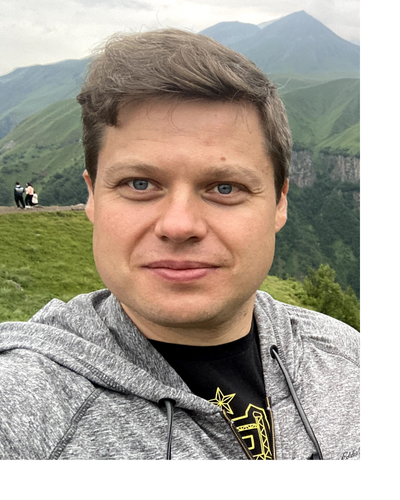 Vadim Sokolov, PhD, is an associate professor in the Systems Engineering and Operations Research Department at George Mason University. He works on building robust solutions for large scale complex system analysis, at the interface of simulation-based modeling and statistics. This involves, developing new methodologies that rely on deep learning, Bayesian analysis of time series data, design of computational experiments and development of open-source software that implements those methodologies. Inspired by an interest in urban systems he co-developed mobility simulator called Polaris that is currently used for large scale transportation networks analysis by both local and federal governments. Prior to joining GMU he was a principal computational scientist at Argonne National Laboratory, a fellow at the Computation Institute at the University of Chicago and lecturer at the Master of Science in Analytics program at the University of Chicago. He has published in such leading statistics, mathematics and engineering journals, as the Annals of Applied Statistics, Transportation Research Part C, Linear Algebra and Its Applications as well as in Mechanical Systems and Signal Processing. He holds a PhD in computational mathematics from Northern Illinois University, and pursued graduate studies in statistics at the University of Chicago, while working at Argonne. See Profile
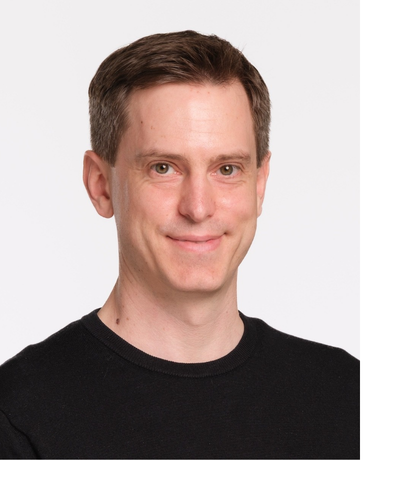
Dean Bodenham, PhD, is a Lecturer in Statistics in the Department of Mathematics at Imperial College London. His research interests include changepoint detection, two-sample testing and missing data. Before joining Imperial he was a postdoctoral researcher at RIKEN in Japan and ETH Zurich in Switzerland. See Profile
About the Moderator
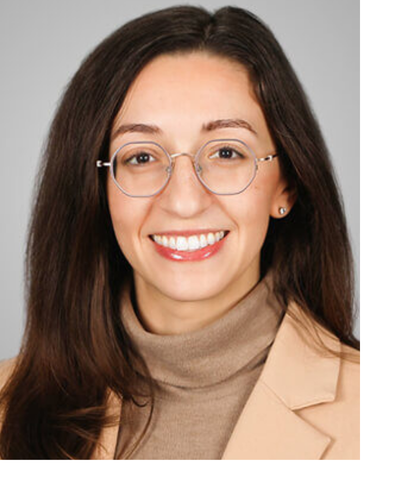 Elizabeth Eisenhauer, PhD, is a Senior Statistical Associate for Statistics and Data Science with 10 years of experience in causal inference, including experiments and quasi-experiments such as interrupted time series and regression discontinuity, and survey sampling and weighting. She integrates quantitative and qualitative perspectives to connect statistical rigor with real-world evaluation practice, applying statistical methods to help answer questions in public health, education, and ecology contexts. Eisenhauer has worked to advance collaboration between statisticians and evaluators by organizing international panels and contributing an article to Amstat News on the topic. As a part-time instructor at Penn State University, Eisenhauer designs and teaches courses in artificial intelligence (AI), machine learning (ML), survey statistics, and introductory statistics at the undergraduate and graduate levels. She is the 2026 vice chair of the American Statistical Association’s (ASA) Committee on Career Development and a 2026 ASA StatsForward fellow. She is also a member of the National Institute of Statistical Sciences-Canadian Statistical Sciences Institute (NISS-CANSSI) Collaborative Data Science Committee. In earlier work as a statistical consultant with Penn State University, Eisenhauer developed and vetted statistical models for researchers across disciplines. Her research included advanced parametric and nonparametric models, sampling designs in Bayesian and frequentist inference frameworks, and survey instrument development to assess students’ attitudes. See Profile
About the NISS-CANSSI Collaborative Data Science Web Series:
The NISS-CANSSI Collaborative Data Science initiative that the National Institute of Statistical Sciences (NISS) in collaboration with the Canadian Statistical Sciences Institute (CANSSI) brings together experts from various fields to tackle complex data challenges through interdisciplinary teamwork and innovative methodologies.
Goals of the Initiative
The goal is to foster progress in:
- Developing new ideas for experimental and observational data-driven learning and discovery that address key questions at the cutting edge of science and scientific deduction;
- Quantifying and summarizing uncertainty in data-driven theories, as well as complex Data Science models, algorithms, and workflows; and
- Establishing new practices for scientific reproducibility and replicability through Data Science.
Learn more: NISS-CANSSI Collaborative Data Science
Event Type
- NISS Hosted
- NISS Sponsored
Host
Cost
Location
Policy