
The National Institute of Statistical Sciences (NISS) is pleased to highlight the 2026 NISS New Researcher Award recipients, who will present invited talks at the Spring Research Conference (SRC), hosted by Clemson University in Clemson, South Carolina, from May 26–28, 2026. For more details about the conference, please visit the official website: https://sites.google.com/view/src2026/home?authuser=0
The award recognizes innovative early-career researchers whose work demonstrates strong potential for advancing statistical science and its applications. For general background on the Spring Research Conference (SRC), see: https://en.wikipedia.org/wiki/Spring_Research_Conference
This year’s awardees—Chi‑Kuang Yeh (Georgia State University), Jie Min (University of South Florida), Chun‑Yi Chang (Michigan State University), and Difan Song (Georgia Institute of Technology)—will present research spanning optimal experimental design, computational statistics, machine learning, and computer experiments. Their invited presentations reflect the breadth and depth of contemporary statistical research and its growing impact across science, engineering, and data-driven decision-making.
Advancing Optimal Design and Public Health Screening
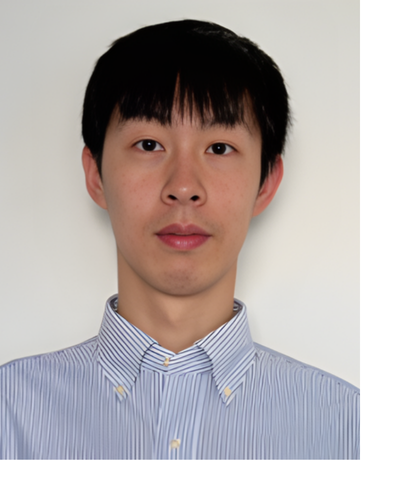 On May 26, Chi‑Kuang Yeh, Assistant Professor of Mathematics and Statistics at Georgia State University, will speak in the invited session on Reliability. His talk, “Optimal Group Testing Design under Cost Constraints with Application to Chlamydia Screening,” introduces a robust optimal design framework for group testing. By incorporating maximin criteria, Yeh’s approach improves parameter estimation under both cost constraints and model uncertainty, with direct relevance to public health screening programs where resources are limited and efficient testing strategies are critical.
Research Summary: Chi-Kuang Yeh’s research focuses on developing statistical methodology for modern data with complex structure, particularly those involving functional observations, high dimensionality, or dependence. He works at the intersection of statistical inference, machine learning, and optimal experimental design to improve estimation, prediction, uncertainty quantification, and efficient data collection. His work spans functional data analysis, statistical machine learning, dependence modelling, and optimal regression design. His long-term goal is to translate rigorous statistical theory into practical, open-source computational tools for addressing important problems in biomedical and other scientific fields. His research has been published in journals such as the Journal of the American Statistical Association and the Electronic Journal of Statistics. He currently serves as an Associate Editor for Statistics and Computing.
Chi-Kuang Yeh is an Assistant Professor of Mathematics and Statistics at Georgia State University. He earned his Ph.D. in Statistics from the University of Waterloo. Before joining GSU, he held a CANSSI Distinguished Postdoctoral Fellowship, with joint appointments at the University of Waterloo and McGill University. During this period, he was also affiliated with Mila – Quebec AI Institute and McGill’s Department of Epidemiology, Biostatistics, and Occupational Health. His research centres on functional data analysis, statistical machine learning, high-dimensional inference, and optimal experimental design, motivated by applied challenges in biomedicine, neuroscience, and other scientific fields.
Innovations in Bayesian Computation for Complex Systems
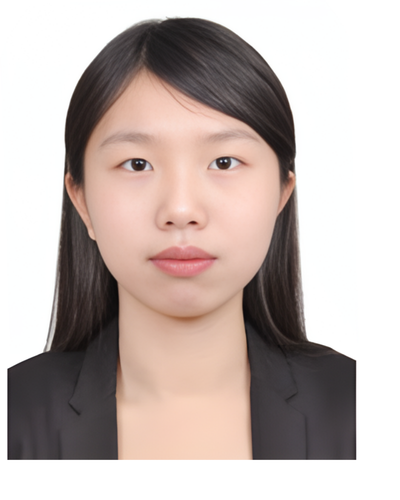 On May 27, Jie Min, Assistant Professor in the Department of Mathematics and Statistics at the University of South Florida, will present in the invited session Innovations for Challenges in Engineering. Her talk, “Block No‑U‑Turn Samplers for Spatially Correlated Accelerated Failure Time Models,” introduces a more efficient Markov chain Monte Carlo (MCMC) framework for spatial survival analysis. By exploiting block structures within No‑U‑Turn Samplers (NUTS), Min’s methodology significantly reduces computational burden while maintaining high-quality posterior sampling. Her work supports reliability analysis and modeling in complex engineering systems, including autonomous vehicles, high-performance computing systems, and AI-driven technologies.
Scalable Machine Learning with Deep Gaussian Processes
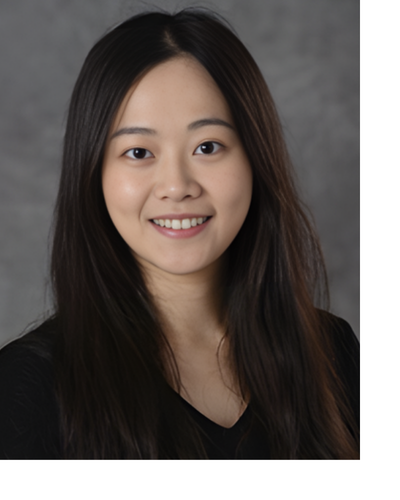 Also on May 27, Chun‑Yi Chang, a fourth‑year PhD student in Statistics and Probability at Michigan State University, will present “Scalable Deep Gaussian Processes via Stochastic Gradient Descent” in one of the Digital Twin invited sessions. Chang’s presentation addresses long-standing scalability challenges in Deep Gaussian Processes (DGPs), which are powerful but computationally demanding models for complex data. Her work introduces a mini-batch stochastic gradient descent framework that enables efficient latent representation learning, making DGPs practical for large-scale datasets while maintaining strong predictive performance. Chang’s research contributes to surrogate modeling, uncertainty quantification, and machine learning for computer experiments.
Research Summary: Chun-Yi Chang’s research addresses the fundamental computational and modeling challenges inherent in Deep Gaussian Processes (DGPs). She first developed the Deep Intrinsic Coregionalization Multi-Output Gaussian Process (DeepICMGP), a surrogate model that extends classical intrinsic coregionalization frameworks through hierarchical GP layers. This approach enables flexible modeling of complex, nonlinear dependencies across multiple outputs in computer experiments. To overcome inherent scalability limitations, her subsequent work introduces a scalable DGP framework that utilizes mini-batch stochastic gradient descent for efficient latent representation learning. This advancement significantly improves computational efficiency, enabling the application of DGPs to large-scale datasets.
Chun-Yi Chang is a PhD student in the Department of Statistics and Probability at Michigan State University, advised by Dr. Chih-Li Sung. Her research focuses on computer experiments, surrogate modeling, uncertainty quantification, and machine learning. Her current work includes multi-output deep Gaussian processes and the development of scalable deep Gaussian processes using stochastic gradient methods.
Active Learning and Efficient Computer Experiments
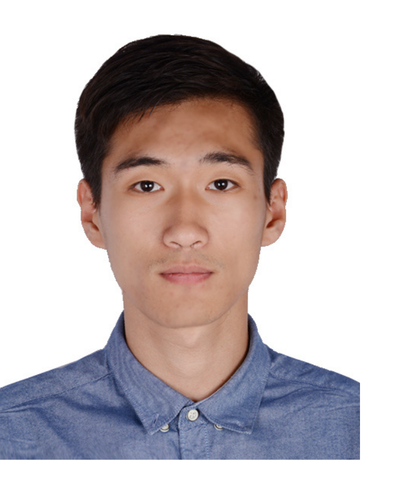 On May 28, Difan Song, a fifth-year PhD student in Industrial Engineering (Statistics specialization) at Georgia Tech and incoming postdoctoral researcher at Harvard University, will present in the Technometrics invited session. His talk, “Efficient Active Learning Strategies for Computer Experiments,” offers a new perspective on active learning by leveraging screening designs and a novel Gaussian process kernel.
Research summary: Difan Song's current research focuses on developing statistical and machine learning methods to address problems in science, engineering, and online applications, where data acquisition is difficult or expensive. His notable contributions include: (1) an efficient optimization framework for calibrating plasma radiation detectors using imperfect inference models, applied to high-energy physics experiments on Sandia National Laboratories' Z machine; (2) novel active learning strategies for computer experiments that benefit emulation and optimization; and (3) screening designs for expensive black-box models with both qualitative and quantitative factors, offering superior performance for variable selection. His research has been published in leading venues including the Journal of the American Statistical Association and Technometrics. He has also been recognized with several awards, including the ASA Sections on Physical and Engineering Sciences and the Quality and Productivity Best Student Paper Award, as well as the Design and Analysis of Experiments Conference and Georgia Statistics Day best poster awards.
Difan Song is a Ph.D. candidate in Industrial Engineering (with specialization in Statistics) at the Georgia Institute of Technology, advised by professors Roshan Joseph and C.F. Jeff Wu. Starting Summer 2026, he will join the Department of Statistics at Harvard University as a postdoctoral researcher. His research develops statistical and machine learning methods for the design and analysis of physical, virtual, and online experiments, with a focus on settings where data acquisition is expensive. Difan is the winner of the ASA Sections on Physical and Engineering Sciences and the Quality and Productivity Best Student Paper Award, as well as the Design and Analysis of Experiments Conference and Georgia Statistics Day best poster awards. He holds an M.S. in Finance from Shanghai Jiao Tong University and a B.A. in Finance from Fudan University.
Celebrating Emerging Leaders in Statistical Science
The NISS New Researcher Awards underscore the Institute’s ongoing commitment to supporting and elevating emerging leaders in statistics and data science. By recognizing researchers at critical stages of their careers, NISS aims to foster innovation and strengthen connections across academia, industry, and government.
NISS congratulates the 2026 award recipients and looks forward to their contributions at the Spring Research Conference and beyond.