Abstract:
Inertial confinement fusion (ICF) experiments rely on accurate ion temperature and emission measurements to diagnose plasma conditions and improve performance. However, due to technical challenges and limited signal, existing ion temperature diagnostics lack spatial resolution, integrating measurements over the neutron source. We present a Bayesian framework that uses Gaussian processes to model spatially varying ion temperature and emission amplitude profiles from imaging data. The approach combines a forward physics model with Markov Chain Monte Carlo inference to reconstruct profiles from synthetic datasets generated under realistic conditions, while providing uncertainty quantification through posterior credible intervals. Results show that the GP-based model can recover spatially resolved temperature and amplitude structure with quantified uncertainty, enabling a new capability for ICF experiments.
Speakers
Ky D. Potter, Statistics PhD candidate at Simon Fraser University; Graduate Student Intern, Statistical Sciences Group (CAI-4) at Los Alamos National Laboratory
Chris Danly, Director’s Postdoctoral Fellow at Los Alamos National Laboratory
Moderator
Emily Casleton, Chair of NISS-CANSSI Collaborative Data Science Webinar Planning Committee; and Los Alamos National Laboratory
About the Speakers
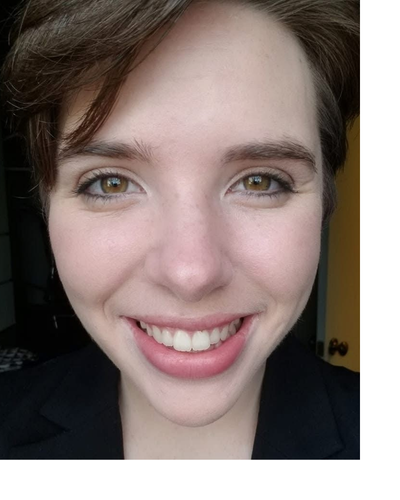 Ky D. Potter is a Statistics PhD candidate at Simon Fraser University and a Graduate Student Intern in the Statistical Sciences Group (CAI-4) at Los Alamos National Laboratory. Their work sits at the intersection of Bayesian statistics and physics, with applications spanning inertial confinement fusion, space and ionospheric physics, and astrostatistics. Ky focuses on scalable Gaussian process models, uncertainty quantification, and statistical emulation for complex, noisy data. Ky enjoys collaborative, interdisciplinary research at the interface of statistics and the physical sciences.
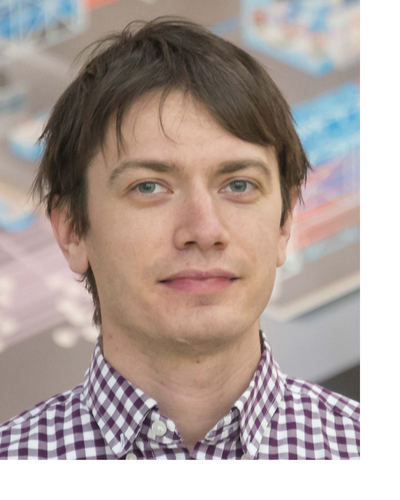 Chris Danly is a Director’s Postdoctoral Fellow at Los Alamos National Laboratory. He received his PhD in plasma physics from the University of Rochester and holds master's degrees in physics and nuclear engineering. Since 2010, Chris has been a member of LANL’s nuclear imaging team, leading development of new imaging techniques to diagnose inertial confinement fusion and high energy density physics experiments. He recently joined the lab’s Analysis division, where his research focuses on applications of fusion ignition, and global security implications of the private fusion R&D boom.
About the Moderator
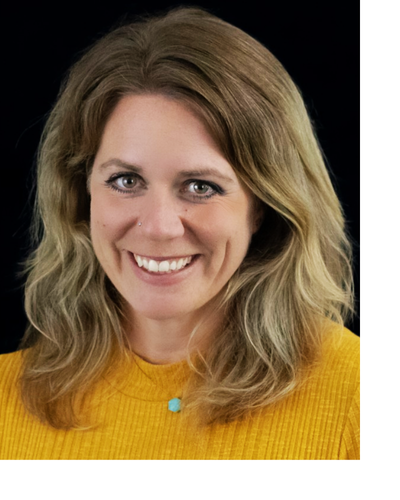 Dr. Emily Casleton is a statistician in the statistical sciences group at Los Alamos National Laboratory (LANL), and was recruited to LANL as a summer student at the 2012 Conference on Data Analysis (CoDA). She joined the Lab as a post doc in 2014 after earning her PhD in Statistics from Iowa State University. Since converting to staff in 2015, Emily has routinely collaborated with seismologists, nuclear engineers, physicists, geologists, chemists, and computer scientists on a wide variety of cool data-driven projects. Most recently, her research focus has been on testing and evaluating large AI models. She holds a BS in Mathematics, Political Science from Washington & Jefferson College, 2003; a MS in Statistics from West Virginia University, 2006; and a PhD in Statistics from Iowa State University.
About the NISS-CANSSI Collaborative Data Science Web Series:
The NISS-CANSSI Collaborative Data Science initiative that the National Institute of Statistical Sciences (NISS) in collaboration with the Canadian Statistical Sciences Institute (CANSSI) brings together experts from various fields to tackle complex data challenges through interdisciplinary teamwork and innovative methodologies.
Goals of the Initiative
The goal is to foster progress in:
- Developing new ideas for experimental and observational data-driven learning and discovery that address key questions at the cutting edge of science and scientific deduction;
- Quantifying and summarizing uncertainty in data-driven theories, as well as complex Data Science models, algorithms, and workflows; and
- Establishing new practices for scientific reproducibility and replicability through Data Science.
Learn more: NISS-CANSSI Collaborative Data Science
Event Type
- NISS Hosted
Host
Website
Location
Policy