
Overview:
This webinar will explore emerging opportunities for statisticians in AI education. In particular, we will feature perspectives from statisticians actively involved in AI education initiatives, highlighting concrete examples, challenges, and best practices.
Speakers
Dr. First Last, Title, Entity
Moderator
Bei Jiang, Assistant Professor, Mathematics & Statistical Sciences, University of Alberta
About the Speaker(s)
(coming soon!)
About the Moderator
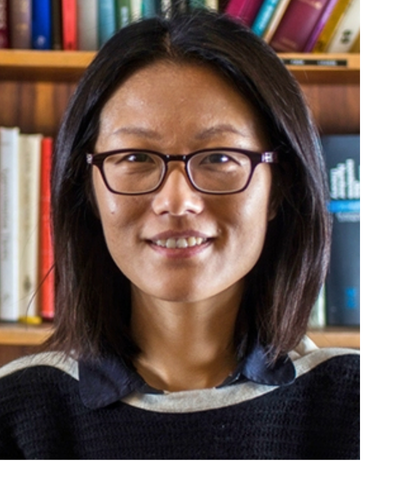 Bei Jiang, PhD, uses statistical analysis and statistical machine learning to decode complex health data, searching for better patient outcomes. Her work has involved analyzing brain imaging, which could help build effective treatment plans for people with psychiatric disorders. Her research also focuses on integrating Bayesian modelling with statistical machine learning methods, aiming to overcome some of the roadblocks of classical statistical inference. Jiang earned her MSc in Biostatistics at the University of Alberta in 2008 before completing her PhD at the University of Michigan. She returned to Edmonton in 2015 — first as an assistant professor and now an associate professor — at the U of A's Mathematical and Statistical Sciences faculty. In 2015, she was also named a research fellow with the U.S.-based Statistical and Applied Mathematical Sciences Institute. Her areas of research includes: Artificial intelligence, machine learning, statistical machine learning, bayesian hierarchical modelling, functional and imaging data analysis, kernel machine regression, modelling of health outcome data, and biostatistics. See Profile
About the NISS-CANSSI
Collaborative Data Science Web Series:
The NISS-CANSSI Collaborative Data Science initiative that the National Institute of Statistical Sciences (NISS) in collaboration with the Canadian Statistical Sciences Institute (CANSSI) brings together experts from various fields to tackle complex data challenges through interdisciplinary teamwork and innovative methodologies.
Goals of the Initiative
The goal is to foster progress in:
- Developing new ideas for experimental and observational data-driven learning and discovery that address key questions at the cutting edge of science and scientific deduction;
- Quantifying and summarizing uncertainty in data-driven theories, as well as complex Data Science models, algorithms, and workflows; and
- Establishing new practices for scientific reproducibility and replicability through Data Science.
Featured Webinars
Data Science Techniques for Control of Assistive Devices After Neurological Injury
Date: Thursday, June 12, 2025 at 1-2pm ET
Speakers: Lauren Wengerd, Ohio State University, Depart of Rehabilitation Science and Dave Friedenberg, Battelle; Moderator: Nancy McMillan, Battelle
From MPEG-4 to Deep Learning: Transforming Audio-Visual Analytics for Healthcare and Beyond
Date: Thursday, May 8, 2025 at 1-2pm ET
Speakers: An-Chao Tsai, Department of Computer Science and Artificial Intelligence, National Pingtung University and Anand Paul, LSU Health-New Orleans; Moderator: Qingzhao Yu, Associate Dean for Research at the School of Public Health, Louisiana State University Health, New Orleans
Astronomy & Cosmic Emulation
Changing Climate, Changing Data: A journey of statisticians and climate scientists
Date: Thursday, March 20, 2025 at 1-2pm ET
Speakers: Claudie Beaulieu, Assistant Professor of Ocean Sciences, University of California, Santa Cruz and Rebecca Killick, Professor of Statistics, School of Mathematical Sciences, Lancaster University; Moderator: Emily Casleton, Statistical Sciences Group, Los Alamos National Laboratory (LANL)
Event Type
- NISS Hosted