
Overview
Join us for the NISS/Merck Meet-Up: Transforming Statistics and Drug Development: The Role of Generative AI and Large Language Models on March 25, 2026. This event will bring together experts from academia, industry, and government to explore how cutting-edge AI technologies—particularly generative AI and large language models (LLMs)—are reshaping the landscape of pharmaceutical research and development.
Speakers Junshui Ma (Merck), James Zou (Stanford University), and Bin Zhu (NIH/NCI) will discuss the transformative potential of AI-driven approaches in drug discovery, clinical trial design, data analysis, and regulatory science. Attendees will gain insights into how these tools are accelerating innovation, enhancing decision-making, and expanding the role of statisticians and data scientists in the life sciences.
This collaborative event, co-hosted by NISS and Merck, offers a unique opportunity for researchers, practitioners, and students to engage in forward-looking discussions on the integration of AI with statistical science in the service of better, faster, and more efficient drug development.
Speakers
Dr. Bin Zhu Senior Investigator in the Division of Cancer Epidemiology and Genetics (DCEG) at the National Cancer Institute (NCI)
Moderator
Dr. Richard Baumgartner, Senior Director, Biometrics Research Department, Biostatistics and Research Decision Sciences (BARDS) at Merck and Co., Inc.
Abstracts
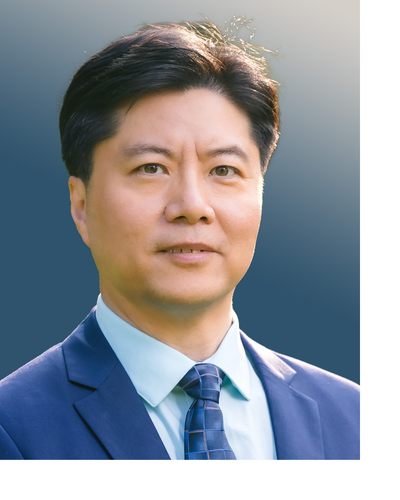 Speaker:
Title: AI Agent Skills as a Universal Framework to Democratize Statistical Expertise
Abstract: The emergence of agent skills—modular, reusable capabilities that extend AI functionality—represents a paradigm shift in how we can deploy specialized statistical knowledge. This presentation introduces the concept of agent skills and demonstrates their power through a case study implementing a skill for dose-response analysis using the MCP-Mod (Multiple Comparison Procedure-Modeling) method. Through the dose-response-analysis skill development journey, this talk will illustrate: (1) the practical workflow of encoding statistical procedures, starting from initial instructional documents, (2) strategies for progressive improvement the skill, and (3) broader implications for reproducibility and knowledge transfer. The agent skills framework offers statisticians a powerful new modality for knowledge encoding that is universally applicable across therapeutic areas, regulatory contexts, and analytical platforms—fundamentally changing how we preserve, share, and deploy statistical expertise in this AI era.
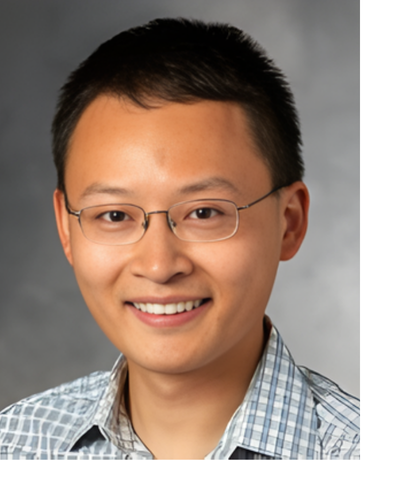 Speaker: Dr.
Talk Title: AI agents to accelerate biomedical discoveries
Abstract: AI agents—large language models equipped with tools and reasoning capabilities—are emerging as powerful research enablers. This talk will explore how agentic AI can accelerate scientific discoveries. I’ll first introduce the Virtual Lab—a collaborative team of AI scientist agents conducting in silico research meetings to tackle open-ended research projects. As an example application, the Virtual Lab designed new nanobody binders to recent Covid variants that we experimentally validated. Then I will introduce Paper2Agent, a framework to automatically convert passive research papers into interactive AI agents.
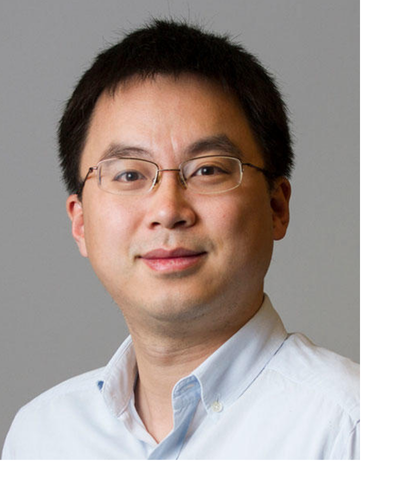 Speaker: Dr. Bin Zhu, Senior Investigator in the Division of Cancer Epidemiology and Genetics (DCEG) at the National Cancer Institute (NCI)
Talk Title: Biostatisticians Meet AI: Navigating Shifts While Preserving Principles
Abstract: Large language models (LLMs) such as ChatGPT are increasingly being incorporated into biostatistical workflows, yet their capabilities and limitations remain incompletely understood. Building on the tutorial by Dobler et al., this talk discusses how reasoning-based LLMs can assist with biostatistical tasks and where they fail. Real-world examples show that LLMs can support latent class analysis and code generation, while also producing incorrect results in meta-analyses. LLMs represent a new productivity paradigm, analogous to the transition from calculators to statistical software, but one that requires systematic evaluation. I propose the development of standardized benchmarks, or a “biostatistics qualifying exam,” to assess LLM performance across core biostatistical tasks. I will also briefly discuss recent work using AI-driven models to improve polygenic risk score prediction, illustrating how AI methods extend beyond classical statistical modeling. In short, effective use of LLMs in science demands greater statistical rigor, with biostatisticians serving as critical evaluators and guardians of scientific validity.
About the speakers
Dr. Bin Zhu is a Senior Investigator in the Division of Cancer Epidemiology and Genetics (DCEG) at the National Cancer Institute (NCI). His research integrates statistics and genomics to extract tumor mutational signatures across diverse study designs and to characterize tumor heterogeneity with translational and clinical relevance. Dr. Zhu has led statistical analyses for many cancer genomic studies within DCEG, as well as for multiple national and international cancer genomics consortia. See Profile
About the Moderator
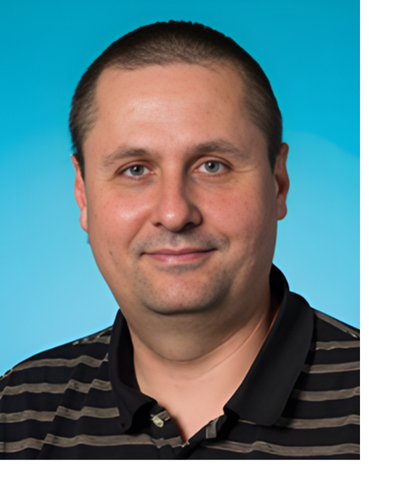 Dr. Richard Baumgartner is a Senior Director with the Biometrics Research Department, Biostatistics and Research Decision Sciences (BARDS) at Merck and Co., Inc. in Rahway, NJ. During his time at Merck, he has supported early clinical and preclinical studies with imaging components, including functional Magnetic Resonance Imaging (fMRI), dynamic contrast-enhanced MRI (DCE-MRI), and Positron Emission Tomography (PET) imaging, in the fields of neuroscience, inflammation, and cardiovascular therapeutics. He is currently involved also in several projects in the field of Artificial Intelligence and Machine Learning (AIML). Previously, he held the position of Associate Research Officer at the Institute for Biodiagnostics, National Research Council Canada in Winnipeg, Canada, where he worked on the development of methods for exploratory analysis of fMRI. At the Institute for Biodiagnostics, he also worked on metabolomic applications to develop diagnostic biomarkers for the prediction of pathogenic fungi and breast cancer. Richard holds a PhD in Electrical Engineering from the University of Technology Vienna, Austria. See Profile
About the NISS/Merck Meet-up Series
The NISS/Merck Meet-Up Series is an ongoing collaborative forum designed to bring together biostatisticians, statisticians, epidemiologists, and data scientists working in or alongside the pharmaceutical industry. Since 2017, the series has provided a dynamic space for experts to explore emerging methodological challenges, share innovative research, and discuss real-world applications that shape drug development and healthcare decision-making.
Each meet-up focuses on a timely topic at the intersection of statistics, data science, and pharmaceutical practice—ranging from foundational issues in clinical trials to cutting-edge advances in AI and machine learning. The series has a long history of spotlighting both established and emerging ideas, encouraging open dialogue among industry leaders, academic researchers, and government scientists.
Event Type
- NISS Hosted