Speakers
Wenyu Zhang, AI Researcher, Center for AI Safety (CAIS), Cornell University
Richard Ren, Center for AI Safety (CAIS), University of Pennsylvania
Moderator
Abstract
Title: Measuring Functional Wellbeing in Large Language Models
Abstract: As large language models are increasingly deployed in everyday interactions with users, questions about their internal states and how those states are shaped by human input have become tractable as empirical research questions. In this talk, we show that it is meaningful to talk about wellbeing in large language models in a functional sense. Although AI systems are not necessarily conscious, they exhibit measurable, consequential preferences over the experiences they undergo in interaction with users. We formalize this as functional wellbeing and develop multiple independent metrics for it. We find that these metrics increasingly converge as models scale, and that a clear neutral baseline emerges separating positively from negatively valenced experiences. Functional wellbeing also predicts model behavior in downstream interactions. Finally, we develop optimized inputs that reliably shift functional wellbeing, providing a controlled means of intervening on these states.
About the Speakers
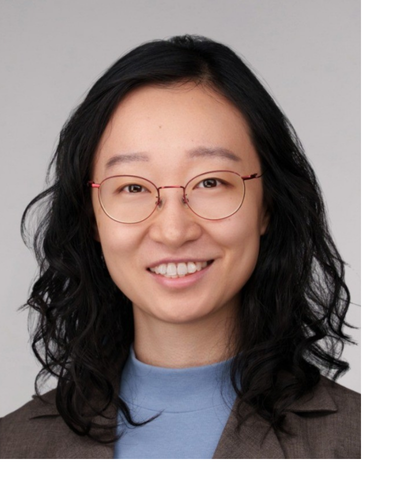 Wenyu Zhang: I am an AI Researcher at the Center for AI Safety, where my work focuses on developing robust, aligned, and transparent artificial intelligence systems. I was previously a Senior Research Scientist at the Institute for Infocomm Research (I²R), specializing in multimodal large language models (LLMs). My research focused on developing localized audio-text LLMs and benchmarks, as part of the National Multimodal LLM Programme. My work also spans vision-language models, computer vision (particularly robustness and transfer learning), and time series prediction and anomaly detection. My broader research interest lies in advancing generalizable and trustworthy AI models for real-world applications. I received my PhD in Statistics from Cornell University in 2020, advised by David Matteson, where I focused on anomaly and change detection. Prior to that, I earned my B.A. in Applied Mathematics and Statistics from UC Berkeley. My undergraduate and PhD studies were supported by the A*STAR National Science Scholarship (BS-PhD). I have also gained experience through research and industry internships at Amazon, MERL and IBM during my PhD. For a full list of my publications, please refer to my Google Scholar profile. See Profile
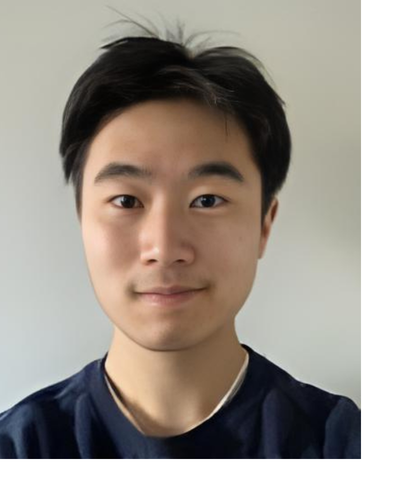 Richard Ren: I have co-led the most comprehensive empirical meta-analysis of AI safety benchmarks to date (Safetywashing, NeurIPS '24) as well as the development of an AI honesty benchmark (MASK). My co-1st-authored work has been presented at the UK Government AI Safety Institute (by invitation), cited by the Singapore Consensus on AI Safety Priorities, published at NeurIPS, cited in xAI's Grok 4 system card, and used by alignment researchers at OpenAI and Anthropic. I work on research and special projects at the Center for AI Safety (CAIS), directly with Dan Hendrycks. I have worn many hats at CAIS: technical researcher, research project manager, special projects associate, and occasionally operations and hiring. I am willing to take on any role that is necessary for humanity to "win" as AI evolves. While a lot of my work is technical in nature, I strongly believe AI safety is a sociopolitical and cultural problem. I believe extraordinarily powerful AI systems will arrive very soon. A list of specific, concrete predictions:
https://richardren.substack.com/p/predictions-on-ai-20262060
Personal website: https://notrichardren.github.io/
Google Scholar: https://scholar.google.com/citations?user=o-Vl80UAAAAJ
About the Moderator
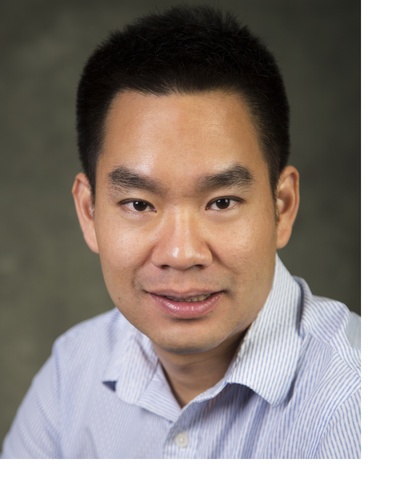 Whitney Huang is an Associate Professor of Statistics at Clemson University, where he has served since August 2019. Prior to joining Clemson, he was a Canadian Statistical Sciences Institute (CANSSI) and Statistical and Applied Mathematical Sciences Institute (SAMSI) postdoctoral fellow at the University of Victoria (UVic), affiliated with the Pacific Climate Impacts Consortium and the School of Earth and Ocean Sciences, working with Dr. Francis Zwiers and Prof. Adam Monahan. Before his time at UVic, he held a SAMSI/University of North Carolina postdoctoral position under the supervision of Prof. Richard Smith. He received his Ph.D. in Statistics from Purdue University in August 2017, advised by Prof. Hao Zhang. During his doctoral studies, he was actively involved in the Research Network for Statistical Methods for Atmospheric and Oceanic Sciences (STATMOS) and the Center for Robust Decision Making on Climate and Energy Policy (RDCEP), collaborating with Michael Stein and Elisabeth Moyer at the University of Chicago and Doug Nychka at the National Center for Atmospheric Research. Before pursuing his doctorate at Purdue, he earned a Master’s degree in Statistics from the University of Akron and a Bachelor’s degree in Mechanical Engineering from National Cheng Kung University in Taiwan. His research interests include statistics of extremes, spatio-temporal statistics, surrogate modeling for computer experiments, time-frequency analysis, multiscale statistical modeling, spatial point processes, environmental applications, and high-frequency physiological data analysis. See Profile
About AI, StAtIstics and Data Science in Practice
The NISS AI, Statistics and Data Science in Practice is a monthly event series will bring together leading experts from industry and academia to discuss the latest advances and practical applications in AI, data science, and statistics. Each session will feature a keynote presentation on cutting-edge topics, where attendees can engage with speakers on the challenges and opportunities in applying these technologies in real-world scenarios. This series is intended for professionals, researchers, and students interested in the intersection of AI, data science, and statistics, offering insights into how these fields are shaping various industries. The series is designed to provide participants with exposure to and understanding of how modern data analytic methods are being applied in real-world scenarios across various industries, offering both theoretical insights, practical examples, and discussion of issues.
Featured Topics:
- Veridical Data Science - Speaker: Bin Yu, October 15,2024
- Random Forests: Why they Work and Why that’s a Problem - Speaker: Lucas Mentch, November 19, 2024
- Causal AI in Business Practices - Speakers: Victor Lo, and Victor Chen, January 24, 2025
- Large Language Models: Transforming AI Architectures and Operational Paradigms - Speaker: Frank Wei, February 18, 2025
- Machine Learning for Airborne Biological Hazard Detection - Speaker: Jared Schuetter, March 11, 2025
- Trustworthy AI in Weather, Climate, and Coastal Oceanography - Speaker: Dr. Amy McGovern, May 13, 2025
- Sequential Causal Inference in Experimental or Observational Settings - Speaker: Aaditya Ramdas, August 26, 2025
- POSTPONED: AI, Statistics & Data Science in Practice Webinar: Reinventing Operations Management’s Research and Practice with Data Science - Speaker: David Simchi-Levi (DATE TBD)
- Covariate Adjustment, Intro to Resampling, and Surprises - Speaker: Tim Hesterberg, October 3, 2025
- Bayesian Geospatial Approaches for Prediction of Opioid Overdose Deaths Utilizing the Real-Time Urine Drug Test - Speaker: Joanne Kim, November 18, 2025
- COVID-19 Focused Cost-benefit Analysis of Public Health Emergency Preparedness and Crisis Response Programs - Speaker: Nancy McMillan, December 11, 2025
Event Type
- NISS Hosted
Cost
Website
Location
Policy