Previous Webinars + Recordings |
|
|
Veridical Data ScienceSpeaker: Professor Bin Yu | October 15, 2024 |
|
|
Random Forests: Why They Work and Why That’s a ProblemSpeaker: Lucas Mentch | November 19, 2024 |


|
|
Causal AI in Business PracticesSpeakers: Victor Lo, and Victor Chen | January 24, 2025 |


 |
Large Language Models: Transforming AI Architectures and Operational ParadigmsSpeaker: Frank Wei | February 18, 2025 |
 |
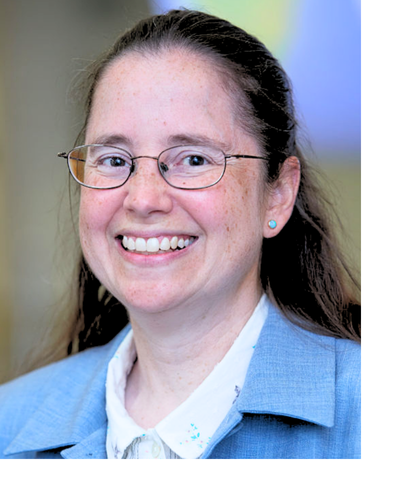
Machine Learning for Airborne Biological Hazard DetectionSpeaker: Jared Schuetter | March 11, 2025 In this talk, we will discuss the development effort for one such device, Battelle's Resource Effective Bioidentification System (REBS), focusing on how the sensor works, what data it produces, what issues the team ran into during the development process, and how those issues were resolved. No background in this domain is expected and efforts will be made to explain the concepts involved. Unfortunately, there may also be some dad jokes involved, so if you are looking for an entertaining talk, don't hold your breath. |
 |
Trustworthy AI in Weather, Climate, and Coastal OceanographySpeaker: Amy McGovern | May 13, 2025 |
|
Fall 2025 Theme: Experimental Design |
|
During Fall 2025, the Ai, Statistics and Data Science in Practice Series focused on the critical role of experimentation in the development and refinement of artificial intelligence (AI) systems: "Incorporating principles of design of experiments and randomization ensures that AI models are trained on reliable, unbiased data, leading to more generalizable and interpretable results. By planning data collection with experimental design and randomization, researchers can minimize bias from uncontrolled variables and improve the statistical validity of their conclusions, whether the models are inferential or predictive. However, in many real-world scenarios, fully controlled experiments may not be feasible. When working with observational data, researchers can employ quasi-experimental techniques to approximate the benefits of randomized trials. These methods help isolate the effects of key variables and adjust for potential confounders, improving the robustness of AI-driven insights. By integrating structured experimentation and causal inference methodologies, AI developers can enhance the reliability and applicability of their models in practice. |
 |
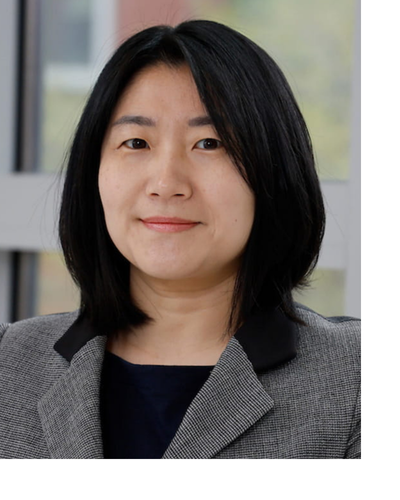
Covariate Adjustment, Intro to Resampling, and SurprisesSpeaker: Tim Hesterberg | October 3, 2025 |
 |
Bayesian Geospatial Approaches for Prediction of Opioid Overdose Deaths Utilizing the Real-Time Urine Drug TestSpeaker: Joanne Kim | November 18, 2025 Recording Coming Soon! |
 |
COVID-19 Focused Cost-benefit Analysis of Public Health Emergency Preparedness and Crisis Response ProgramsSpeaker: Nancy McMillan | December 11, 2025 Methods: Annual workplans and progress reports provided significant components of the program implementation information for both PHEP and PHCR. Natural language processing was used to recode recipient workplans, which allowed us to standardize common implementation across recipients. Path analysis and lasso regression models were used to assess the relationship between reported activities and outcomes. These methods addressed the issue of handling a big-p (activities), little-n (recipients) problem. Outcomes assessed included time to implement control measures, availability of COVID-19 therapeutics, COVID-19 tests and vaccines administered, and hospital bed availability. The benefits associated with specific implementation decisions (funding allocation, planned activities, and outputs) were estimated for statistically significant relationships. Results: Activities and outputs were associated with faster non-essential business closures, earlier implementation of mask mandates, more frequent reporting to the public, more COVID-19 test administration, and larger availability of hospital beds and COVID-19 therapeutics during surges. Additionally, funding allocations for 4 of the 6 preparedness capability domain areas (countermeasures and mitigation, incident management, information management, and surge management) were associated with the ability to administer more COVID-19 tests and vaccines and increased hospital bed availability during peak surges. Conclusions: PHEP and PHCR funding had measurable positive effects on recipients’ ability to respond to the COVID-19 pandemic effectively. Ongoing efforts in specific areas of public health emergency preparedness will improve future responses to COVID-19-like events. Recording Coming Soon! |
|
Spring 2025 Theme: Large Language Models (LLMs) |
|
During Spring 2026, from January through May 2026, the series will focus on large language models (LLMs) and the statistical and methodological foundations required to develop, evaluate, and deploy them responsibly and effectively. As LLMs become central to a wide range of scientific, industrial, and societal applications, careful attention to data generation, model training, evaluation, and inference is essential to ensure reliability, robustness, and transparency. As LLMs become increasingly central to scientific research, industry workflows, and societal decision-making, rigorous attention to how training data are constructed, curated, and sampled is critical for understanding model behavior and limitations. The series will highlight methodological considerations in model training and fine-tuning, including sources of bias, variability, and uncertainty, as well as principled approaches to benchmarking and evaluation that move beyond surface-level performance metrics. Emphasis will be placed on transparent and reproducible evaluation frameworks that support meaningful comparisons across models and use cases, and on statistical perspectives that help clarify what LLM outputs do and do not represent. By grounding discussions of LLM development and deployment in sound statistical reasoning, the series aims to promote more reliable, interpretable, and trustworthy language models in practice. |
 |
LabOS: The AI-XR Co-Scientist That Reasons, Sees and Works With HumansSpeaker: Mengdi Wang | January 20, 2026 Recording Unavailable (Declined Consent) |
|
|
From LLMs to World Foundation Models & Robotics: The Next Frontier of Artificial IntelligenceSpeaker: Robert Clark | Tuesday, February 24, 2026 - 12:00pm to 1:30pm ET Recording Coming Soon! |