Please note: this event has already taken place. You may find the news story along with the event recording here: Advancing Artificial Intelligence: Insights from the NISS Webinar on Large Language Models and World Foundation Models | National Institute of Statistical Sciences
Overview
Artificial Intelligence has grown exponentially over the past several years and continues to make its way into our everyday lives. While large language models have proven quite capable in a wide range of tasks from code generation to solving complex math problems, creative writing, summarization, and more, we are at an inflection point in the AI world as the next frontier of models are being produced. In this session, we will discuss a brief history of LLMs and how they are currently used in industry as tools to aid productivity. We will then transition to the next domains for AI models to learn, such as world foundation models and robotics, including some of the challenges that need to be solved in this space.
Speaker
Robert Clark, Senior AI architect, NVIDA
Moderator
About the Speaker
 Robert Clark is a senior AI architect at NVIDIA with six years at the company with experience in training and deploying large language models for enterprise customers. He led the adaptation of NVIDIA’s LLM suite to Kubernetes, Run:ai, and Base Command Manager, delivering industry‑specific solutions that scale reliably. He is passionate about customizing models for various domains in an effort to continually improve the accuracy and reliability of outputs.
About the Moderator
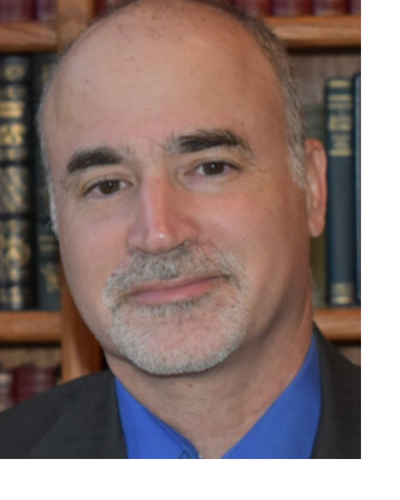 Dr. George Rodriguez, Dr. George Rodriguez is a recently retired Computational Chief Scientist who worked in chemicals' R&D for 29 years supporting materials discovery and manufacturing. He holds a PhD in Chemistry, and a Masters in Statistics.
About AI, Statistics and Data Science in Practice Webinars
The NISS AI, Statistics and Data Science in Practice is a monthly event series brings together leading experts from industry and academia to discuss the latest advances and practical applications in AI, data science, and statistics. Each session features a keynote presentation on cutting-edge topics, where attendees can engage with speakers on the challenges and opportunities in applying these technologies in real-world scenarios. This series is intended for professionals, researchers, and students interested in the intersection of AI, data science, and statistics, offering insights into how these fields are shaping various industries. The series is designed to provide participants with exposure to and understanding of how modern data analytic methods are being applied in real-world scenarios across various industries, offering both theoretical insights, practical examples, and discussion of issues.
During Spring 2026, from January through May 2026, the series will focus on large language models (LLMs) and the statistical and methodological foundations required to develop, evaluate, and deploy them responsibly and effectively. As LLMs become central to a wide range of scientific, industrial, and societal applications, careful attention to data generation, model training, evaluation, and inference is essential to ensure reliability, robustness, and transparency. As LLMs become increasingly central to scientific research, industry workflows, and societal decision-making, rigorous attention to how training data are constructed, curated, and sampled is critical for understanding model behavior and limitations. The series will highlight methodological considerations in model training and fine-tuning, including sources of bias, variability, and uncertainty, as well as principled approaches to benchmarking and evaluation that move beyond surface-level performance metrics. Emphasis will be placed on transparent and reproducible evaluation frameworks that support meaningful comparisons across models and use cases, and on statistical perspectives that help clarify what LLM outputs do and do not represent. By grounding discussions of LLM development and deployment in sound statistical reasoning, the series aims to promote more reliable, interpretable, and trustworthy language models in practice.
- Veridical Data Science - Speaker: Bin Yu, October 15,2024
- Random Forests: Why they Work and Why that’s a Problem - Speaker: Lucas Mentch, November 19, 2024
- Causal AI in Business Practices - Speakers: Victor Lo, and Victor Chen, January 24, 2025
- Large Language Models: Transforming AI Architectures and Operational Paradigms - Speaker: Frank Wei, February 18, 2025
- Machine Learning for Airborne Biological Hazard Detection - Speaker: Jared Schuetter, March 11, 2025
- Trustworthy AI in Weather, Climate, and Coastal Oceanography - Speaker: Dr. Amy McGovern, May 13, 2025
- Sequential Causal Inference in Experimental or Observational Settings - Speaker: Aaditya Ramdas, August 26, 2025
- Covariate Adjustment, Intro to Resampling, and Surprises - Speaker: Tim Hesterberg, October 3, 2025
- Bayesian Geospatial Approaches for Prediction of Opioid Overdose Deaths Utilizing the Real-Time Urine Drug Test - Speaker: Joanne Kim, November 18, 2025
- COVID-19 Focused Cost-benefit Analysis of Public Health Emergency Preparedness and Crisis Response Programs - Speaker: Nancy McMillan, December 11, 2025
- LabOS: The AI-XR Co-Scientist That Reasons, Sees and Works With Humans - Speaker: Mengdi Wang, January 20, 2026
- From LLMs to World Foundation Models & Robotics: The Next Frontier of Artificial Intelligence - Speaker: Robert Clark, February 24, 2026
- Recent Advances in the Statistical Foundations of Large Language Models - Speaker: Weijie Su, March 17, 2026
Event Type
- NISS Hosted
Cost
Website
Location
Policy