Speaker
Yichi Zhang, Data Scientist at YouTube, Google
Moderator
Grace Deng, Research Data Scientist, Google
Abstract
About the Speaker
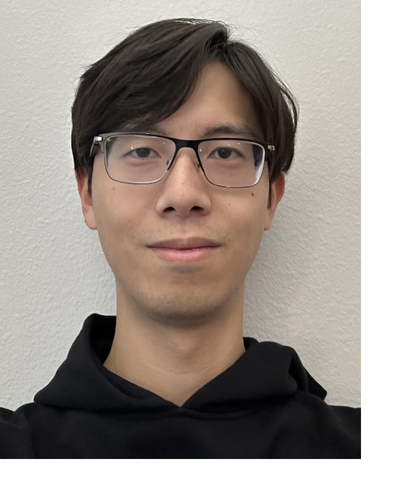 Yichi Zhang is currently a data scientist at YouTube, Google. He currently works on developing and applying rigorous experiment designs and statistical methods for measuring impacts and driving decisions of products and partnerships by YouTube. He obtained his PhD degree in Biostatistics from Yale University. His research focused on developing causal inference and machine learning methodology for applications in biomedical and social sciences, aiming to unravel complex data patterns that incur selection and confounding bias to inform responsible, interpretable, and tractable decision-making for effective individual-level interventions or population-level policies.
About the Moderator
Grace Deng is currently a research data scientist at Google and formerly interned at Amazon Search and Instagram. She is a member of the NISS Affiliates Leadership Committee, and sits on the Industry Affiliates Subcommittee. Grace completed her PhD in Statistics from Cornell University in 2022 and received her undergraduate degree at UC Berkeley in Statistics and Economics. Her research focus includes generative ML/AI models for synthetic data and Bayesian time series models. She is the recipient of the Cornell Hemmeter Entrepreneurship Award (2020) and JSM Best Student Paper Award at JSM (2021), as well as various hackathon and datathon awards.
Event Disclaimer
The views and opinions expressed by the speakers during this event are their own and do not necessarily reflect the views, positions, or policies of their employers, affiliated organizations, or any other entity. The speakers are participating in a personal capacity, and their statements should not be attributed to their respective companies or institutions.
About AI, StAtIstics and Data Science in Practice
The NISS AI, Statistics and Data Science in Practice is a monthly event series will bring together leading experts from industry and academia to discuss the latest advances and practical applications in AI, data science, and statistics. Each session will feature a keynote presentation on cutting-edge topics, where attendees can engage with speakers on the challenges and opportunities in applying these technologies in real-world scenarios. This series is intended for professionals, researchers, and students interested in the intersection of AI, data science, and statistics, offering insights into how these fields are shaping various industries. The series is designed to provide participants with exposure to and understanding of how modern data analytic methods are being applied in real-world scenarios across various industries, offering both theoretical insights, practical examples, and discussion of issues.
During Fall 2026, from September through December 2026, the series will focus on Trustworthy AI and the statistical, methodological, and governance foundations needed to develop, evaluate, and deploy AI systems responsibly and effectively. As AI becomes increasingly embedded in scientific research, business operations, public services, and societal decision-making, establishing confidence in the reliability, fairness, transparency, and accountability of these systems is essential. The series will examine approaches to measuring and mitigating bias, quantifying uncertainty and risk, evaluating robustness under changing conditions, and developing interpretable models and transparent evaluation frameworks that support informed decision-making. Emphasis will be placed on reproducibility, responsible data practices, privacy and security considerations, human oversight, and lifecycle monitoring to ensure that AI systems continue to perform as intended after deployment. By grounding discussions of AI development and governance in sound statistical reasoning and rigorous empirical evaluation, the series aims to promote AI systems that are not only accurate and innovative, but also trustworthy, equitable, and aligned with societal values.
See full list of featured topics (also below)
Featured Topics:
- Veridical Data Science - Speaker: Bin Yu, October 15,2024
- Random Forests: Why they Work and Why that’s a Problem - Speaker: Lucas Mentch, November 19, 2024
- Causal AI in Business Practices - Speakers: Victor Lo, and Victor Chen, January 24, 2025
- Large Language Models: Transforming AI Architectures and Operational Paradigms - Speaker: Frank Wei, February 18, 2025
- Machine Learning for Airborne Biological Hazard Detection - Speaker: Jared Schuetter, March 11, 2025
- Trustworthy AI in Weather, Climate, and Coastal Oceanography - Speaker: Dr. Amy McGovern, May 13, 2025
- Sequential Causal Inference in Experimental or Observational Settings - Speaker: Aaditya Ramdas, August 26, 2025
- Covariate Adjustment, Intro to Resampling, and Surprises - Speaker: Tim Hesterberg, October 3, 2025
- Bayesian Geospatial Approaches for Prediction of Opioid Overdose Deaths Utilizing the Real-Time Urine Drug Test - Speaker: Joanne Kim, November 18, 2025
- COVID-19 Focused Cost-benefit Analysis of Public Health Emergency Preparedness and Crisis Response Programs - Speaker: Nancy McMillan, December 11, 2025
- LabOS: The AI-XR Co-Scientist That Reasons, Sees and Works With Humans - Speaker: Mengdi Wang, January 20, 2026
- From LLMs to World Foundation Models & Robotics: The Next Frontier of Artificial Intelligence - Speaker: Robert Clark, February 24, 2026
- Recent Advances in the Statistical Foundations of Large Language Models - Speaker: Weijie Su, March 17, 2026
- Evaluating LLMs by Human Preference Using Arena AI - Speaker: Anastasios N Angelopoulos, April 17, 2026
- Causal Generalist Medical AI - Speaker: Hongtu Zhu, May 19, 2026
- Measuring Functional Wellbeing in Large Language Models - Speakers: Wenyu Zhang & Richard Ren, June 16, 2026
- Judging the Judges: Statistical Evaluation of LLM-Based Metrics for Trustworthy AI Agents - Speaker: Ginger Holt, September 15, 2026
- NISS Ai, Statistics & Data Science Webinar: Steve Sain, Jupiter Intelligence - Speaker: Steve Sain, October 20, 2026
- AI Advancing Business for ROIs, Outcomes, and Impact - Speaker: Kelly Zou, November 20, 2026
Event Type
- NISS Hosted
Cost
Location
Policy